Feed FAQ
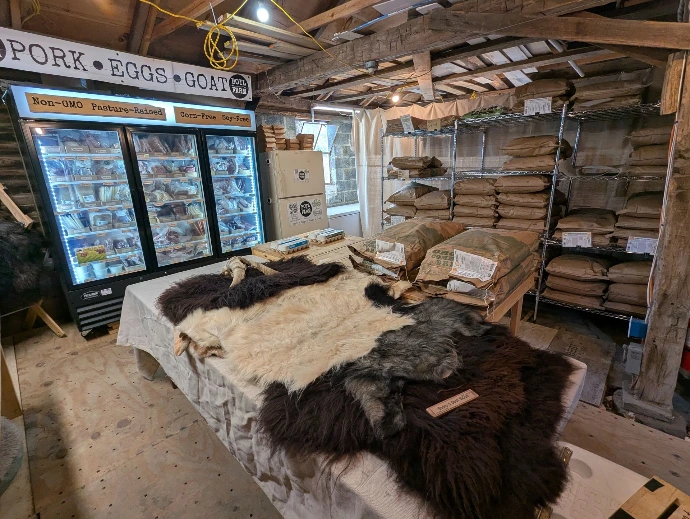
Because we resell super premium animal feed we get lots of the same questions over and over again. Hopefully this page will help answer some of the common questions.
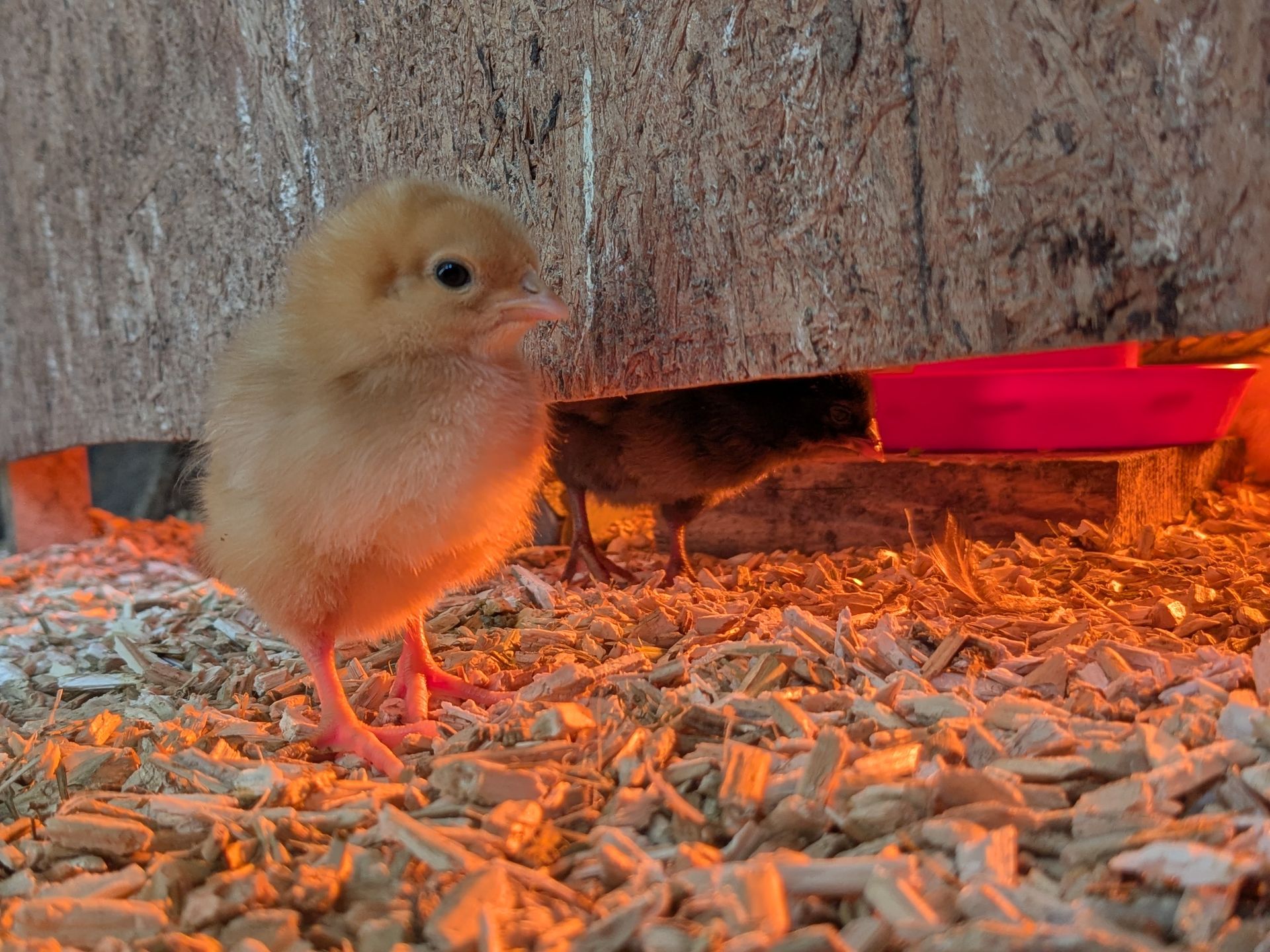

I'm getting chicks. I'm excited.
Great, we're excited for your journey. You should think about getting starter feed, starter grit, some sort of feeder, waterer(s), and bedding. Unless it's high summer, you'll also need heat lamps to keep your balls of fluff warm.
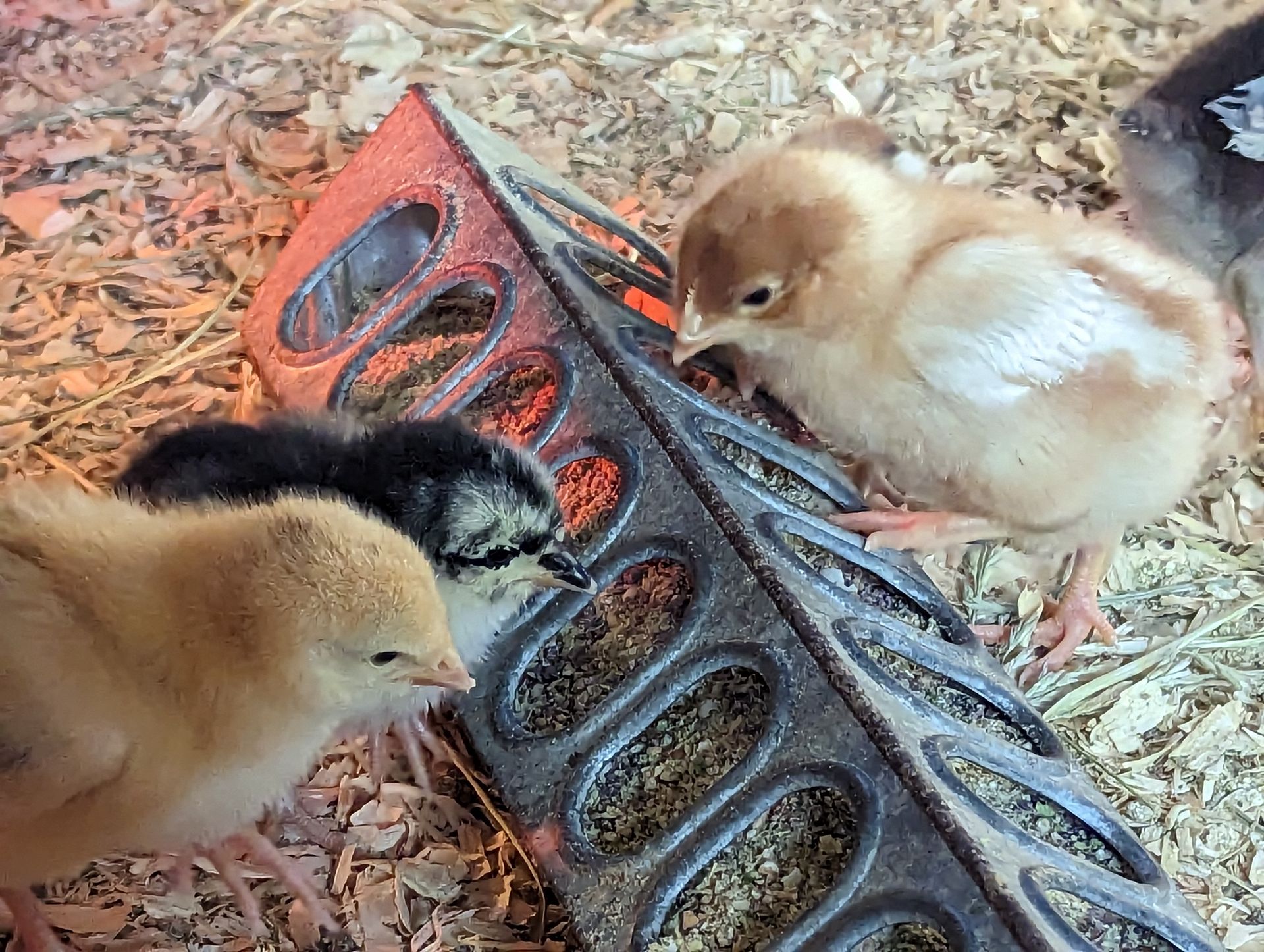
I just got them home. So fluffy.
For the first four weeks (or so) of life they will eat chick starter feed. This is a finely ground, high protein feed. Plan for roughly 3 lbs total during this period per chick, so if you have 20 chicks you'll need about 60 lbs starter feed total. We recommend "top dressing" the starter feed with starter grit (aka sprinkle grit on top of the feed each time you fill the feeders). Grit helps the chicks digest bigger food particles and helps establish strong gizzards.
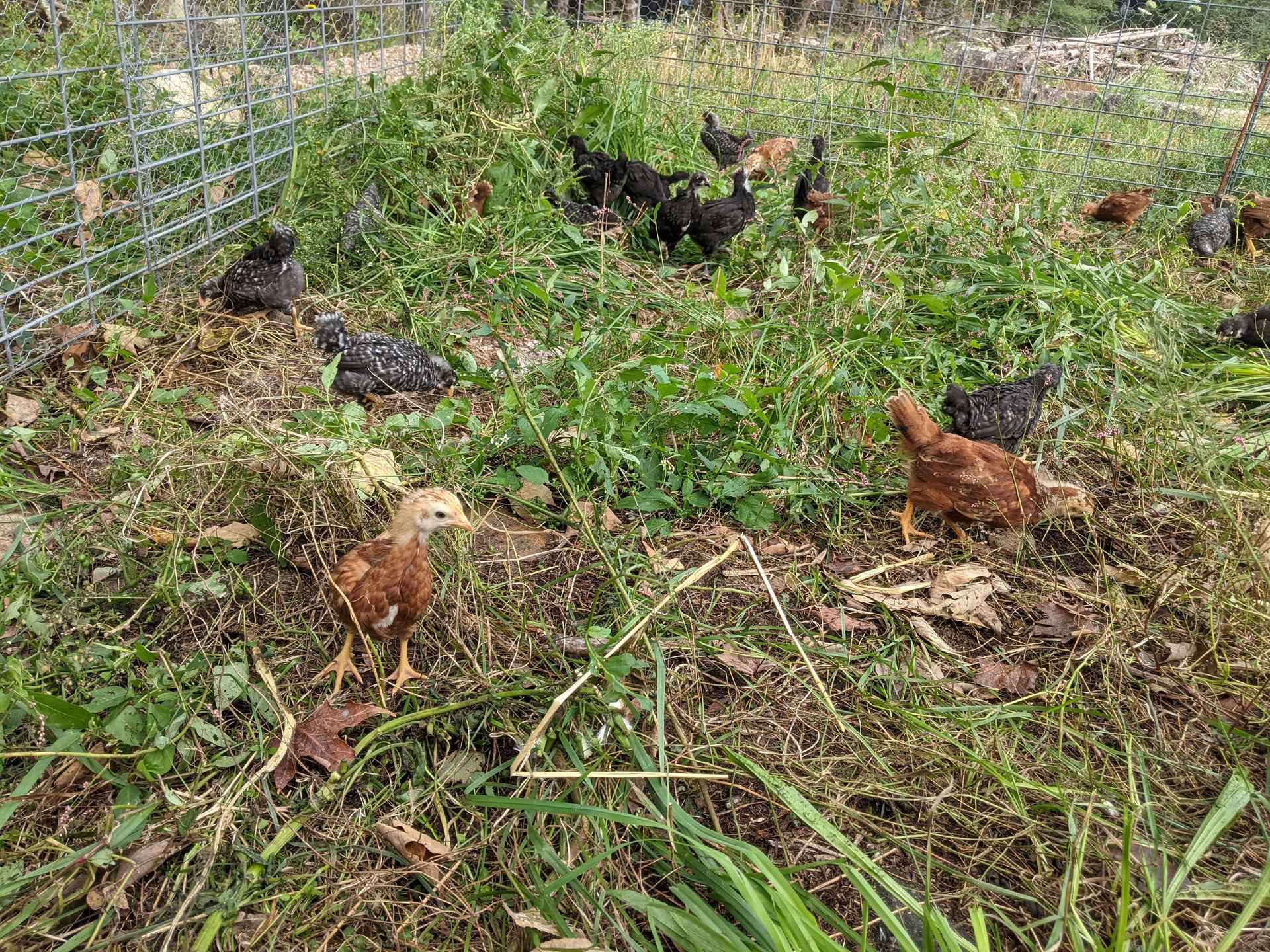
At four weeks old
Whether you're raising layers or meat birds, when the chicks are four weeks old (or so), it's time to switch to grower/broiler feed and grower grit. The feed has larger particles and the grit is bigger as well. Meat birds will finish on grower/broiler feed, but layer chicks will transition to a different feed anywhere from 16 to 18 weeks or when they're close to laying age (dependent on breed).
At 16 to 18 weeks for layers
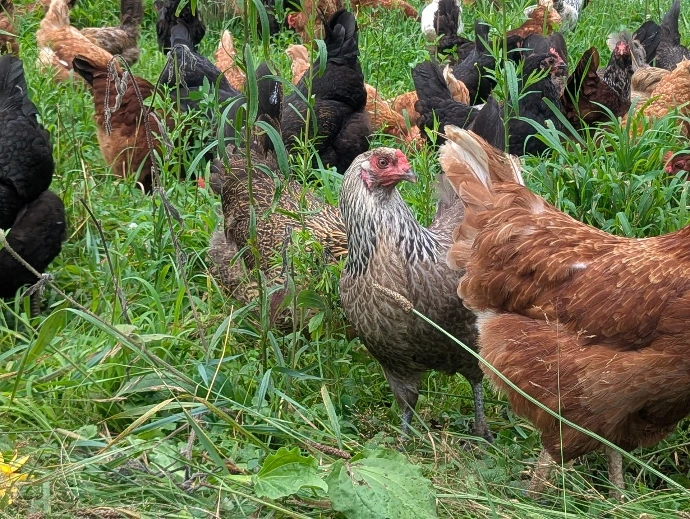
When chicks are close to laying age, they need to transition to layer feed and layer/developer grit. Layer feed contains a lot of calcium, which is necessary for shell formation. Even though layer feeds are ~4% calcium by weight, we recommend offering free choice oyster shell as an additional calcium supplement. We've also observed that our layers don't eat much layer-sized grit, so we routinely offer both grower and layer sized grit throughout their laying life.
Lines of feed
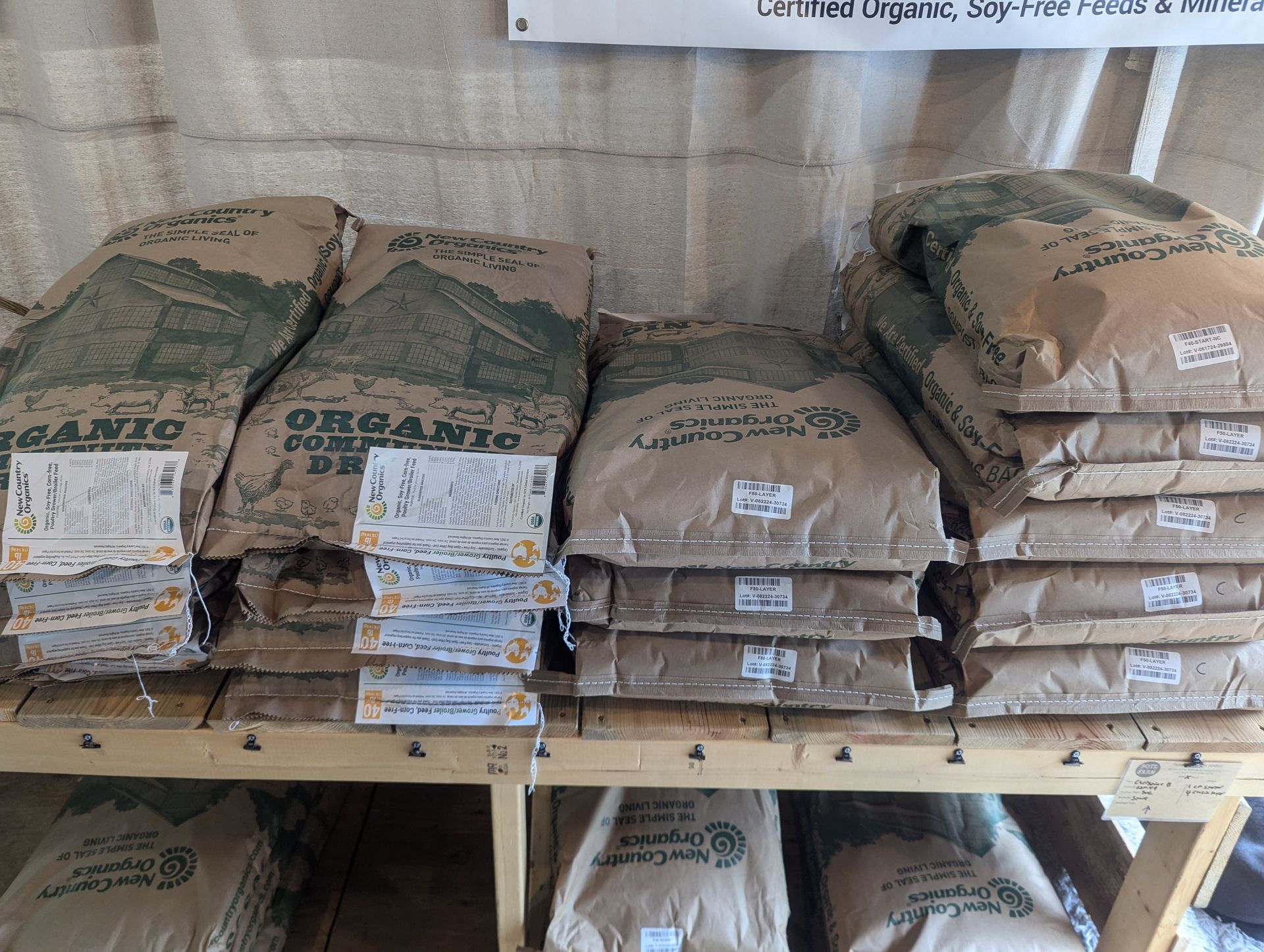
New Country Organics offers several lines of feeds. More info is available on their website, but here's a rundown. Note that some are available in starter, grower, and layer types (S, G, L) but some are just layer (L). All NCO feeds are soy-free.
Classic: contains corn. S, G, L
Corn-free: does not contain corn. S, G, L
Olive Oil: same as corn free but does not contain seed oils. S, G, L
Wheat-free: does not contain wheat. Contains corn. L
Pasture Perfect: no one really understands what NCO is doing here, but it's a cheaper version and we don't really recommend. Does not contain corn. S, G, L
Power Pellets: classic feed but fines are pelletized. Contains corn. G, L
Unmilled classic: good for soaking and fermenting. Contains corn. L
Pellets/crumbles: assorted, see NCO website for more info
My chickens waste a lot of feed, the dusty part
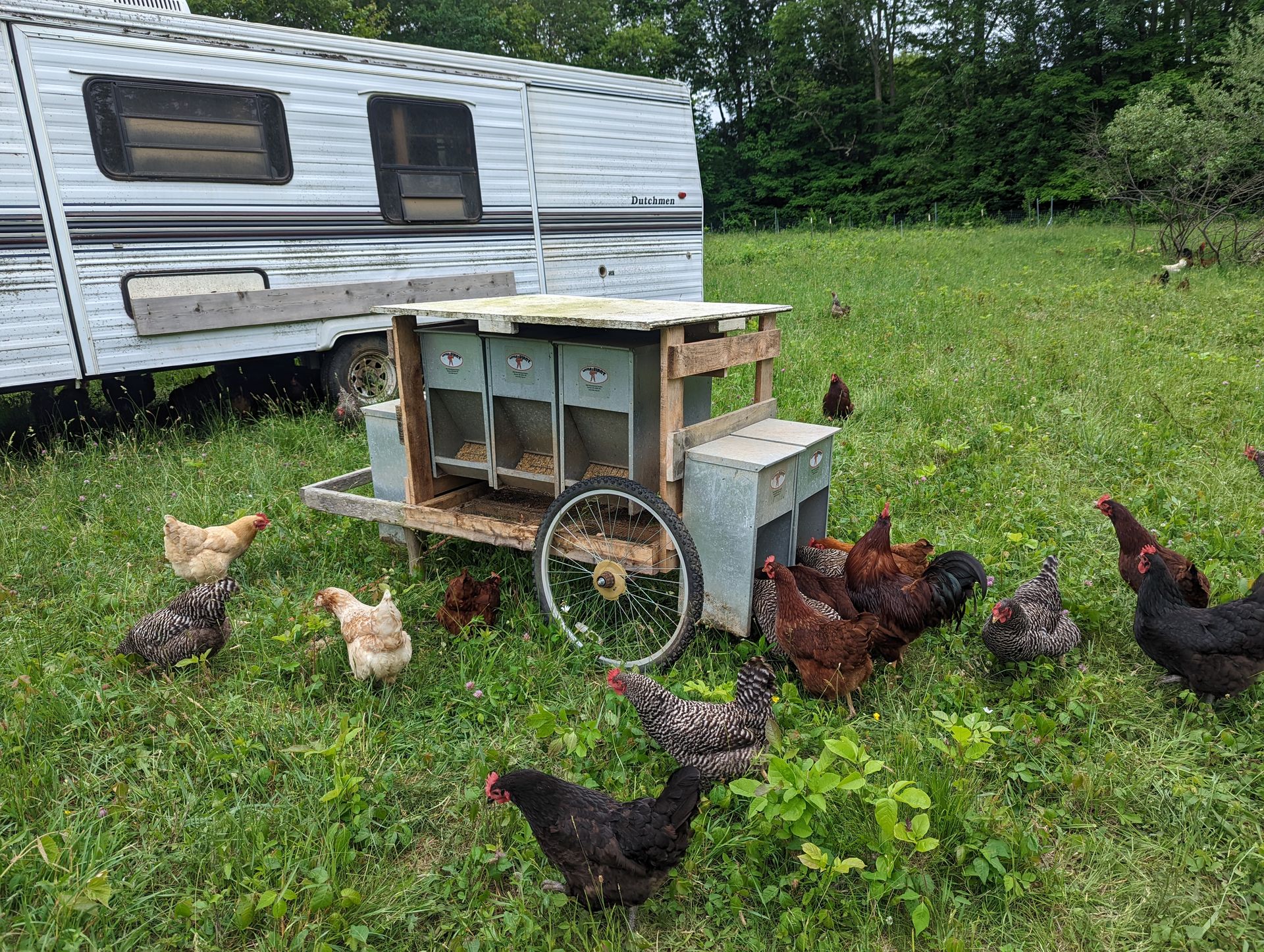
In the words of the not-so-famous Jeffrey Mattocks, "chickens don't eat dust." The "dust," also called fines, are where the probiotics, minerals, and vitamins are. We want our chickens to ingest all that goodness! We've had success with soaking feed for 24 - 72 hours before feeding, but we're also interested in how the Power Pellets perform. The fines are pelleted and the rest of the feed is a coarse mash, but since there isn't a corn-free version we haven't been able to test it ourselves (note that we do not regularly ingest chicken feed, we mean with our flock). Our customers report mostly good but some mixed results with Power Pellets.
Page Last Updated on 2026-04-30